

By Kenneth Rust, Louisiana Pond Management
In the world of stormwater management, the terms “detention pond” and “retention pond” are often used interchangeably, yet they serve very different purposes. While the pronunciation may be “tomato/tomahto,” the functional differences are significant and directly impact long-term maintenance, water quality, and liability for property owners. Understanding these distinctions can save homeowners, commercial property owners, and homeowners associations considerable time, money, and frustration.
What is a Detention Pond?
A detention pond is essentially a dry basin (an excavated depression) that temporarily holds stormwater only during and immediately after a rain event. Key characteristics include:
- The basin remains empty under normal conditions.
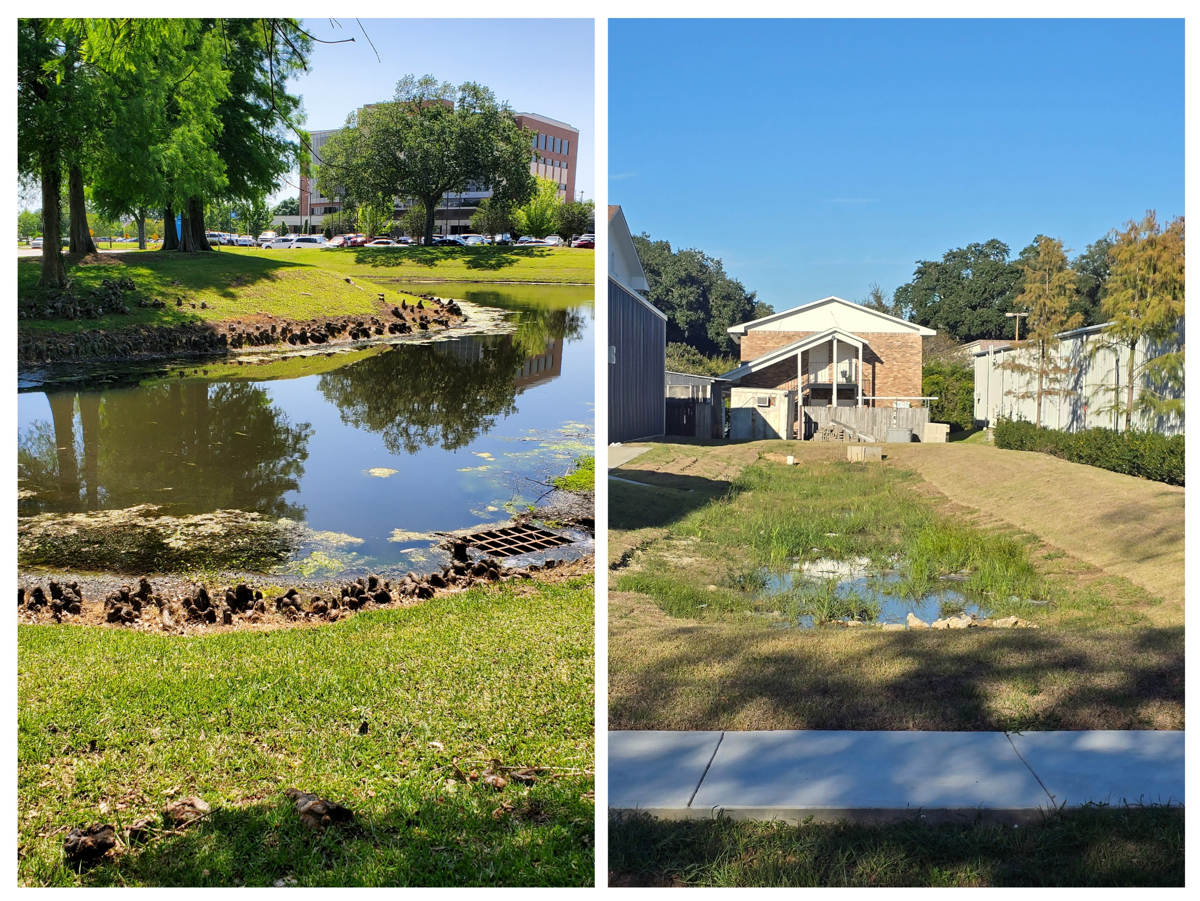
- Stormwater enters during rainfall and is released at a controlled, metered rate through a designated outflow structure—typically a small pipe, riser, or screened outlet surrounded by riprap or stone.
- The primary purposes are flood prevention and the capture of physical debris.
- By holding a large volume of runoff and releasing it slowly, detention ponds prevent rapid surges into local tributaries and downstream drainage systems.
- Because the outlet is usually screened or protected with stone, organic material (grass clippings, leaves, small branches) and inorganic litter (plastic bags, bottles, etc.) are trapped and prevented from traveling further downstream.
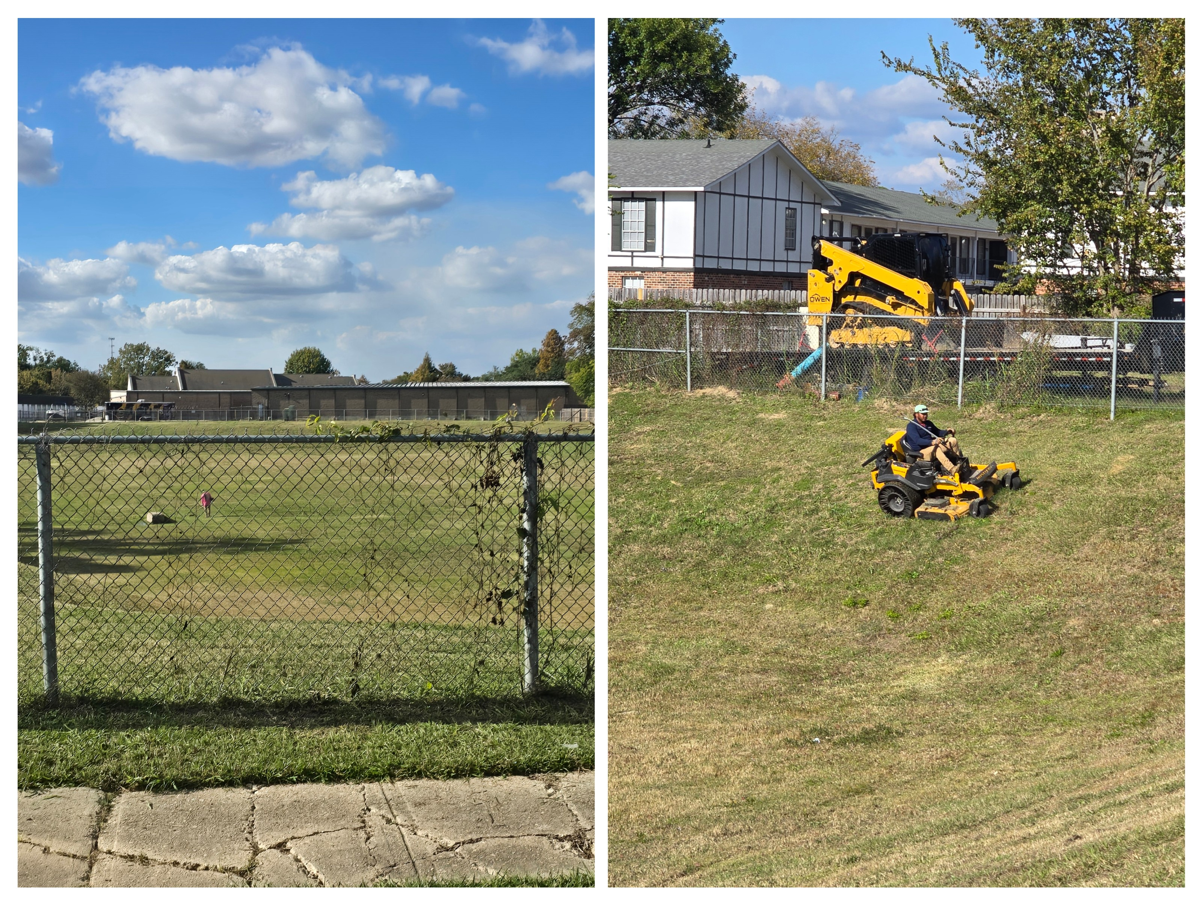
- Once the water recedes, debris is left on dry ground, making cleanup straightforward during routine landscaping or maintenance.
In short, detention ponds are engineered for temporary storage and controlled release.
What is a Retention Pond?
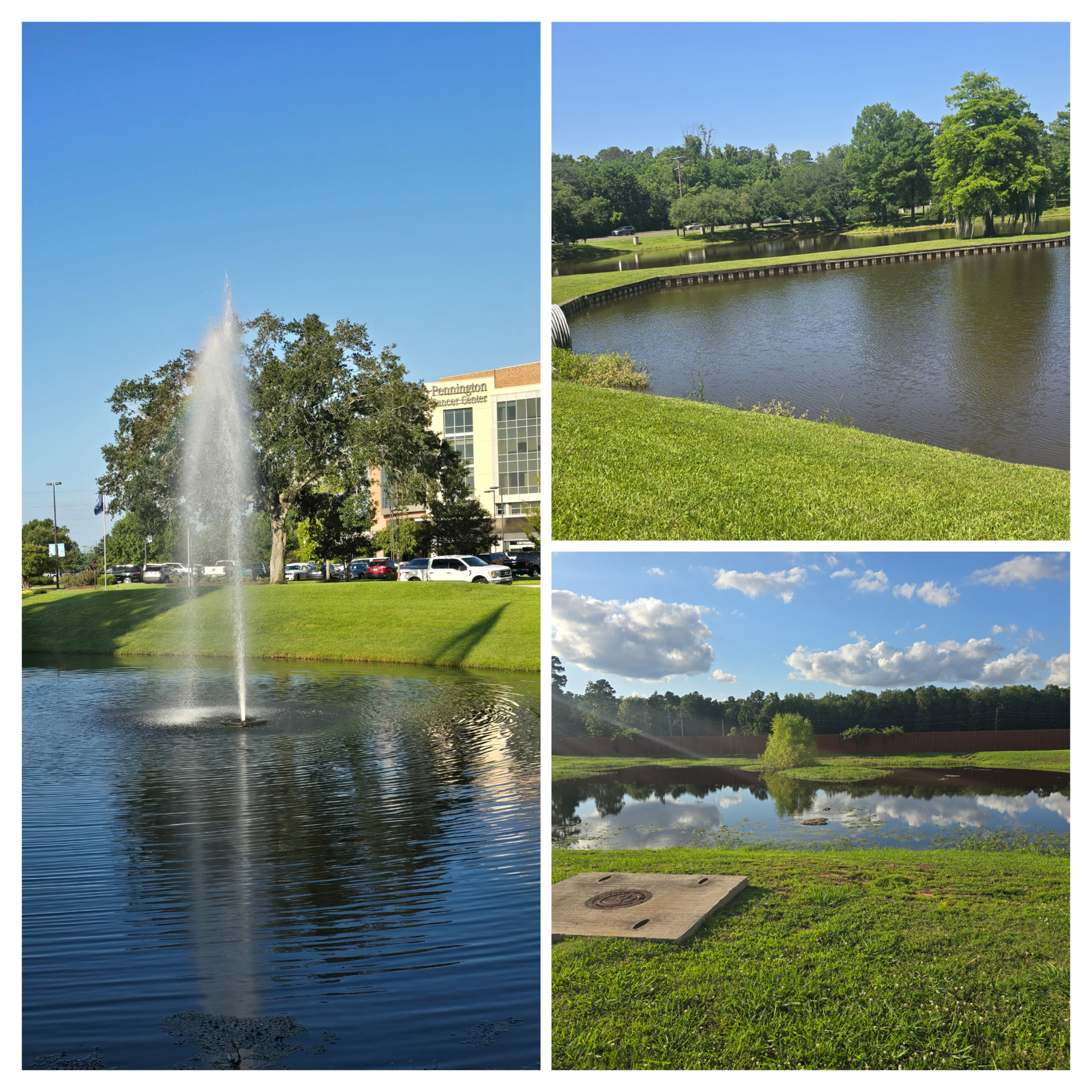
A retention pond, by contrast, is a permanent water body designed to hold water year-round. These ponds are sometimes referred to as “wet ponds.” Key features include:
- The pond maintains a permanent pool of water, even in dry weather.
- During rain events, additional stormwater enters the pond, raising the water level temporarily.
- Excess water exits through a culvert, standpipe, or riser structure at essentially the same rate it enters (unless the pond had been drawn down beforehand).
- Inlet and outlet structures permanently dictate the normal water elevation. Altering these levels usually requires major reconstruction.
- An emergency overflow should always be present to handle extreme rainfall events.
Retention ponds were originally designed not to prevent flooding, but to improve water quality by allowing pollutants, sediment, and nutrients to settle out or be processed biologically before water continues downstream.
Critical Differences in Debris and Long-Term Management
The presence of permanent water in retention ponds dramatically changes how debris and organic material are handled:
- Litter (e.g., a plastic grocery bag) that enters a retention pond becomes waterlogged, may float to the center or snag on vegetation, and is far more difficult and unpleasant to retrieve than the same item left on the dry bed of a detention pond.
- Grass clippings, leaves, and other organic material that wash into a detention pond dry out and are typically mulched during normal mowing. In a retention pond, the same material sinks, decomposes, consumes oxygen, feeds algae and nuisance aquatic vegetation, and builds layers of organic muck on the bottom.
- Over time, this muck accumulation reduces overall pond depth, decreases storage capacity, and can create chronic water-quality issues.
Many retention ponds across Louisiana were constructed with average depths of less than 4 feet for cost reasons during development. Shallow ponds are significantly harder (and more expensive) to manage long-term and represent an ongoing liability for the property owner or HOA.
Poorly constructed detention ponds will not drain completely and allow water to stand for long periods. This is problematic for two reasons: First, the water body is temporary and not able to grow fish that would normally consume mosquito production. However, it is a perfect environment to produce massive amounts of mosquitoes. Secondly, it is just wet enough to prevent a standard landscaping crew from mowing and picking up trash, and too dry to access for management with a small boat.
A Common Misconception
You will frequently see media or real estate materials claim that retention ponds “prevent flooding.” This is incorrect in normal operating conditions. Because the pond is already full, water that enters during a storm must exit at approximately the same rate. Only if the pond has been intentionally drawn down beforehand will it provide meaningful additional flood storage. The true purpose of a retention pond is water-quality treatment, not flood control.
The Hidden Liability for Property Owners
Whether you are an individual homeowner, commercial entity, or homeowners association, a retention pond on your property—even when marketed as an attractive “water feature/waterfront” during sale—represents a perpetual maintenance obligation. Shallow, poorly designed, or aging retention ponds can become chronic sources of algae, odors, mosquitoes, and nuisance vegetation if not properly managed.
Protect Your Investment with a Professional Assessment
Before purchasing property with an existing pond, or even after closing if you’ve recently inherited pond responsibility, a professional pond assessment is one of the wisest investments you can make.
At Louisiana Pond Management, we provide comprehensive evaluations that include:
- Detailed depth profiling
- Assessment of inlet/outlet structures and erosion issues
- Identification of current and potential aquatic vegetation problems/litter point source issues
- Recommendations for long-term management and cost projections
Having this documentation in your files protects you as a property owner and gives you a clear roadmap for responsible stewardship.
If you have a pond or lake in Louisiana that needs expert evaluation or ongoing management, contact Louisiana Pond Management today. We have the experience and equipment to help you avoid costly surprises and keep your water body functioning properly for years to come.
Louisiana Pond Management – Serving property owners across the state with professional pond and lake solutions.
